Prediction of gene expression from epigenome data


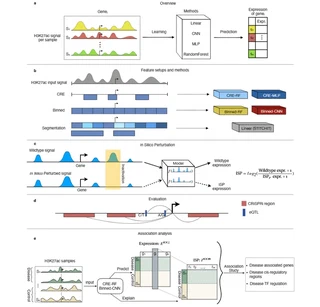
Prediction of gene expression from epigenome data is an important task to link epigenome variation to changes in gene expression. Over the years we have designed a number of machine learning methods that present approaches for learning those links. We have made a number of models available for the community in the EpiExpress repository that allows to conduct histone-acetylation based epigenome association studies.
Linked publications


I’m a PhD student in Bioinformatics and Computational Biology, with a background in Computer Science. My path into computational biology was not a straight line: during my Master’s degree, I worked on image processing and machine learning approaches for fMRI data analysis, and before starting my PhD, I spent five years as a software engineer in industry.
During my PhD, I have been applying machine learning and computational approaches to biological questions while building expertise in genomics and molecular biology. One of my main projects focuses on understanding the relationship between epigenomic regulation and gene expression by developing and benchmarking machine learning approaches to predict transcriptomic states from epigenomic features. Beyond prediction performance, I am interested in making these models interpretable by identifying the regulatory elements and biological features that contribute to their decisions, enabling a better understanding of the mechanisms underlying gene regulation.
In parallel, I work on integrating and analyzing large-scale single-cell RNA-seq datasets and developing visualization tools for exploring single-cell atlases. Through these projects, I aim to bridge machine learning and computational methods with biological insights to better understand cellular regulation and disease processes.