MISPIL and/or PCMultiome
26 October 2023· ·
1 min read
·
1 min read
Laura Rumpf
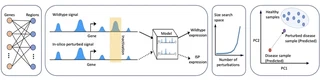
We use gene-specific models to predict expression from epigenetic activity and perturb candidate regulatory elements in silico to identify small combinations that shift disease-associated expression profiles toward healthy states. By formulating this as a combinatorial optimization problem, we can efficiently prioritize regulatory regions for follow-up experimental perturbation.

Authors
Laura Rumpf
(she/her)
PhD student
I’m a computer scientist by training who found my way into bioinformatics during my master’s. My work focuses on understanding enhancer–gene regulation using machine learning and single-cell transcriptomic and epigenomic data. I’m particularly interested in how computational models can help uncover regulatory mechanisms and translate these insights into disease-related questions in computational medicine. Outside the lab, I’m usually fueled by coffee and a slightly too serious interest in latte art.